Development of a Low Cost 3D-printed Nonmydriatic Portable Fundus Camera

Nathaniel Tak, BS1, Akshay Reddy, BS2, David Felsted, DO3
1. Midwestern University Arizona College of Osteopathic Medicine, Glendale, AZ
2. California University of Science and Medicine School of Medicine, Colton, CA
3. Barnet Dulaney Perkins Eye Center, Flagstaff, AZ
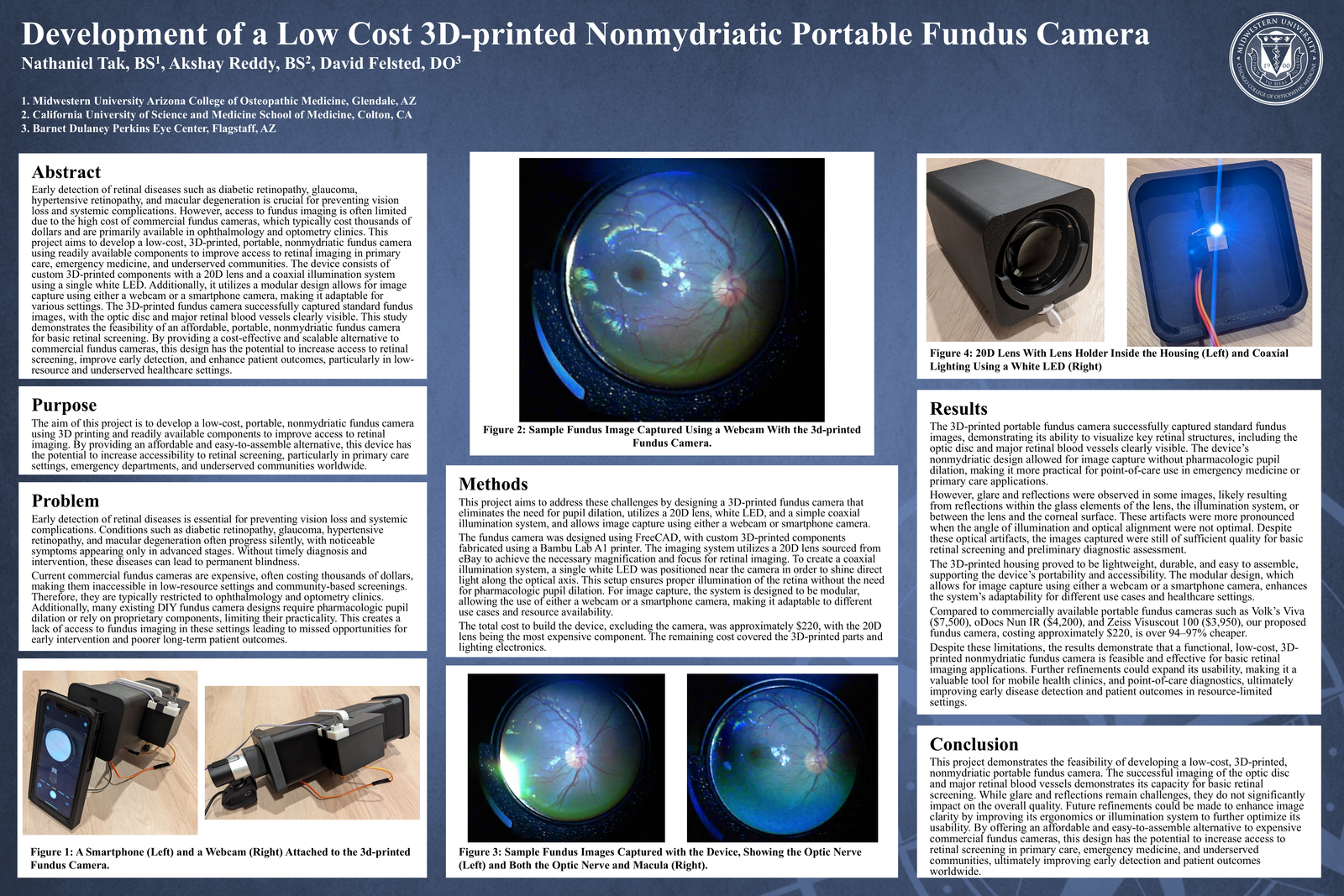
Abstract: Early detection of retinal diseases such as diabetic retinopathy, glaucoma, hypertensive retinopathy, and macular degeneration is crucial for preventing vision loss and systemic complications. However, access to fundus imaging is often limited due to the high cost of commercial fundus cameras, which typically cost thousands of dollars and are primarily available in ophthalmology and optometry clinics. This project aims to develop a low-cost, 3D-printed, portable, nonmydriatic fundus camera using readily available components to improve access to retinal imaging in primary care, emergency medicine, and underserved communities. The device consists of custom 3D-printed components with a 20D lens and a coaxial illumination system using a single white LED. Additionally, it utilizes a modular design allows for image capture using either a webcam or a smartphone camera, making it adaptable for various settings. The 3D-printed fundus camera successfully captured standard fundus images, with the optic disc and major retinal blood vessels clearly visible. This study demonstrates the feasibility of an affordable, portable, nonmydriatic fundus camera for basic retinal screening. By providing a cost-effective and scalable alternative to commercial fundus cameras, this design has the potential to increase access to retinal screening, improve early detection, and enhance patient outcomes, particularly in low-resource and underserved healthcare settings.