
Ophthalmology Legislative Tracker Website

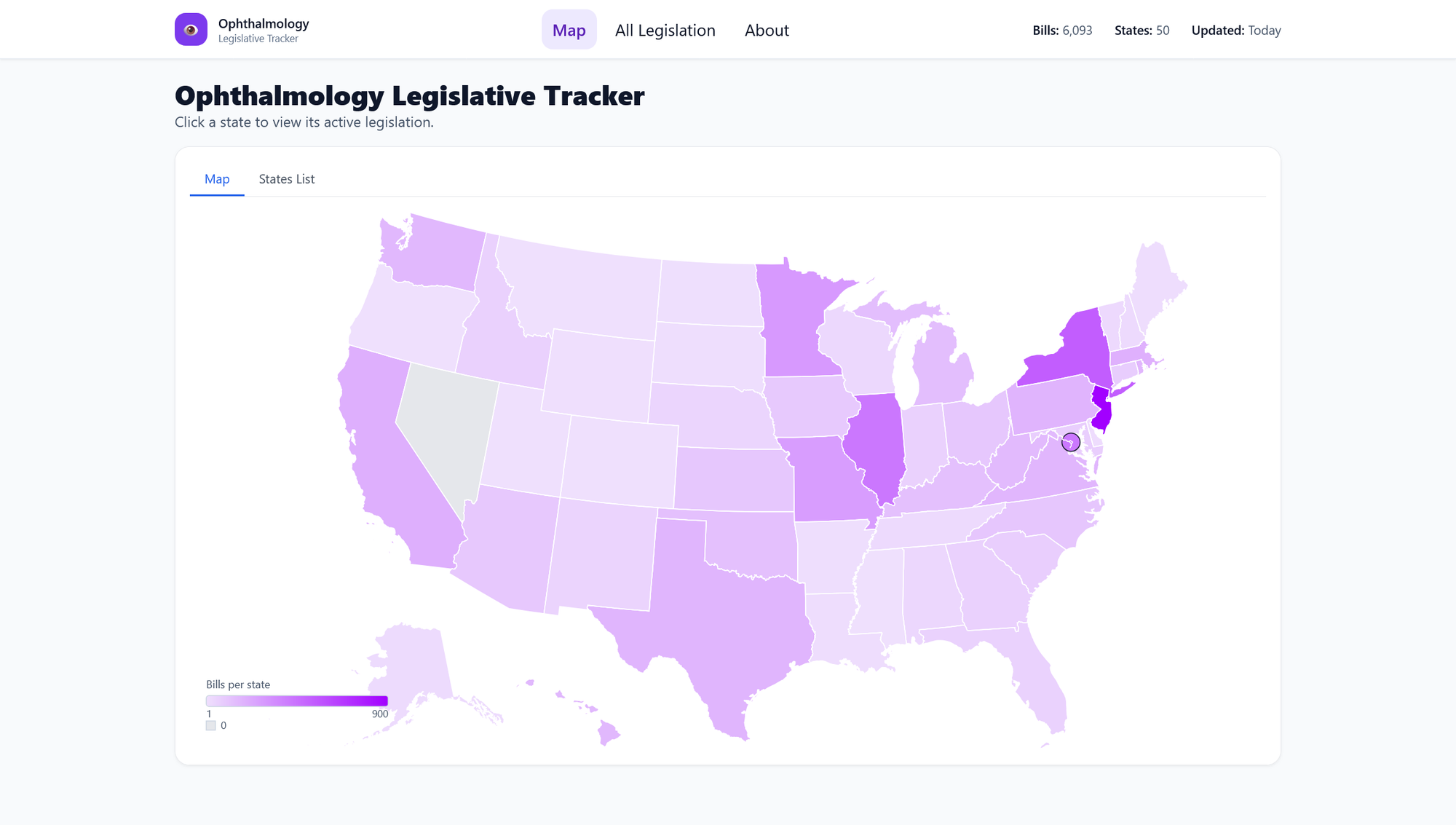

Click to try it out!
Have you ever tried reading a legislative bill and realized halfway through that you have no idea what it’s actually saying? You’re not alone. For many of us in medicine, understanding how laws affect our field can feel overwhelming, but it doesn’t have to be.
Making Sense of Legislation in Medicine
No matter what field you’re in, legislation affects your life. Laws regulate what people and organizations can and can’t do, helping keep society fair and functional. They might seem distant or abstract at times, but they shape nearly everything around us: from how we work to how we receive healthcare.
In medicine, legislation plays a huge role. It sets the boundaries for what physicians are allowed to do, defines professional standards, and influences how care is delivered. But here’s the problem: legislation is complicated. The language in bills can be confusing, and understanding how a proposed law might affect your field often requires talking directly with legislators or legal experts. For many medical students and even practicing doctors, this can make getting involved in advocacy feel intimidating or out of reach.
Why We Built This Tool
That’s exactly why my friend Parsa and I decided to build a tool to make legislative advocacy more approachable for people in medicine, especially for those interested in ophthalmology and optometry.
Our goal was simple: reduce the barrier to understanding state-level legislation by making it easier to find and interpret relevant bills.
Here’s how it works. The tool gathers legislative bills from all 50 states, plus at the national level, that relate to ophthalmology or optometry. Then, using AI, each bill is automatically analyzed and summarized. The tool gives each one a “relevance grade,” showing how closely it relates to the field, along with a short explanation for why that grade was assigned.
This way, users don’t have to wade through pages of dense legal text. Instead, they can quickly see which bills matter most to their area and understand their potential impact, all in one place.
How It’s Evolved
Version 1
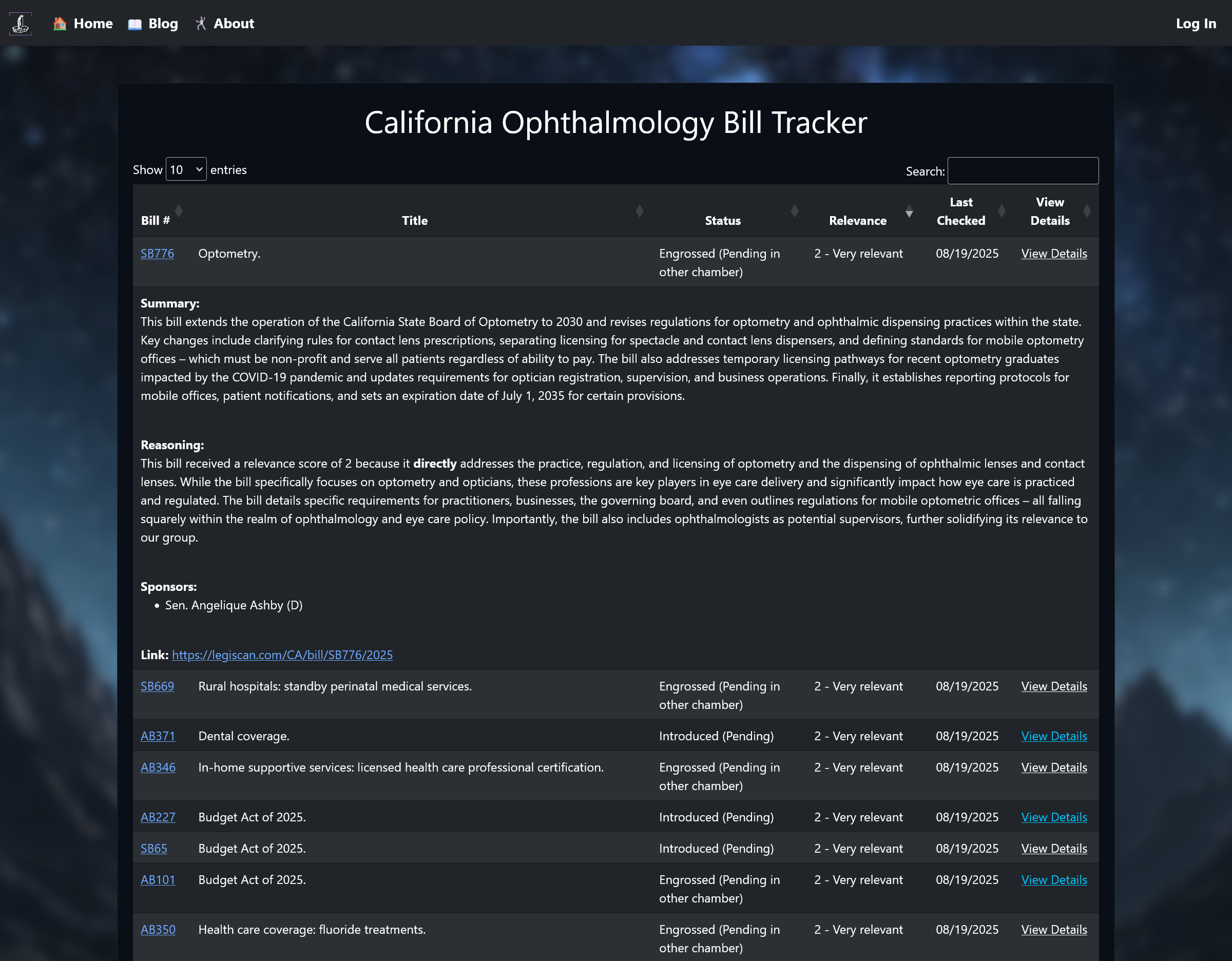
The first prototype (https://www.mlpenguin.com/present/flis/bills/ca) was pretty straightforward, a simple list of relevant bills sorted by relevance, with a “More Details” button to read the summary and reasoning behind each one. However, it didn't look nice, and it was difficult to navigate and view all legislation in each of the states quickly or efficiently.
Version 2
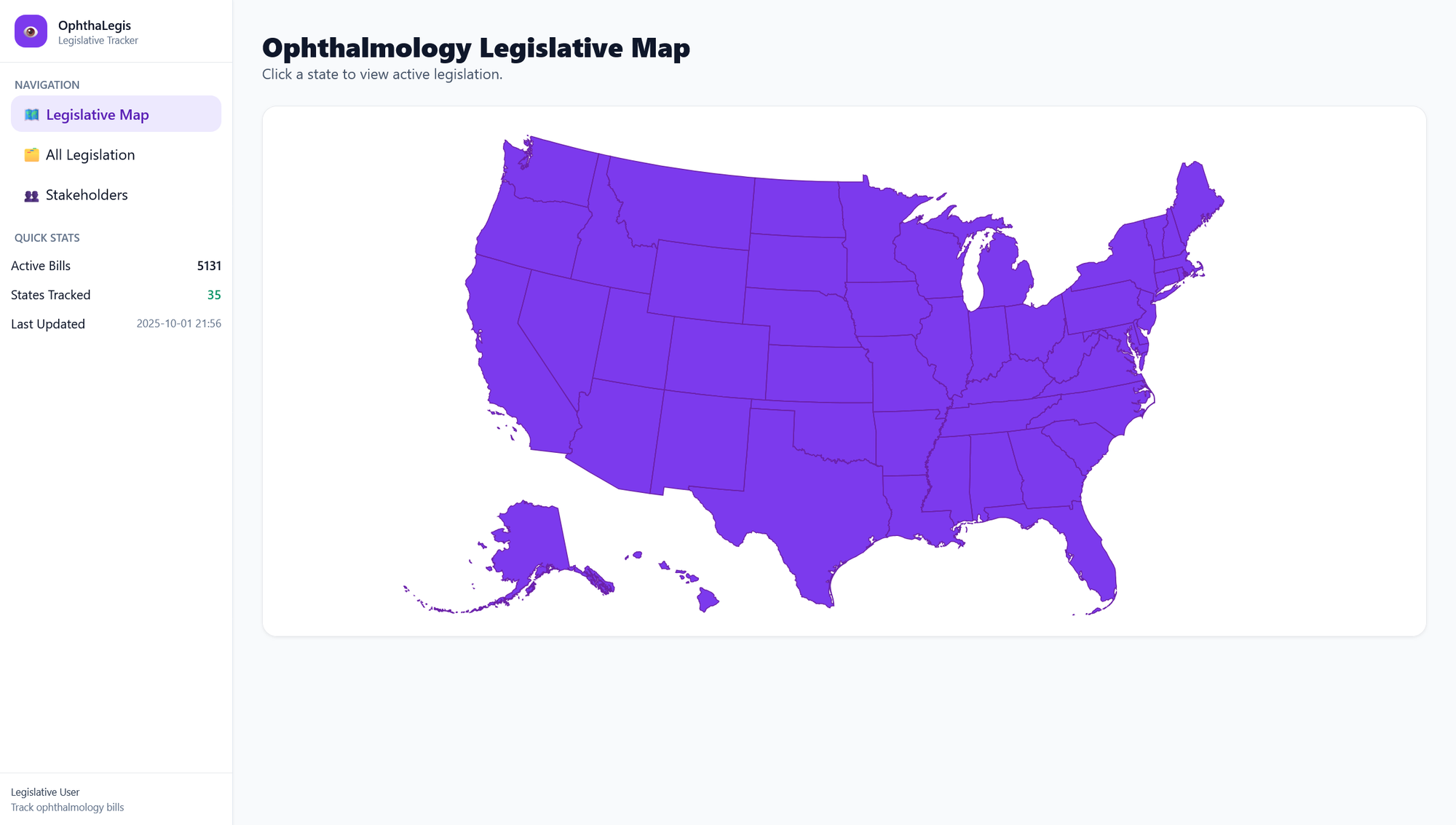
In the second version, we focused on improving the design and usability. We added a cleaner interface and made it easier for users to select their state, which was something the original version lacked.
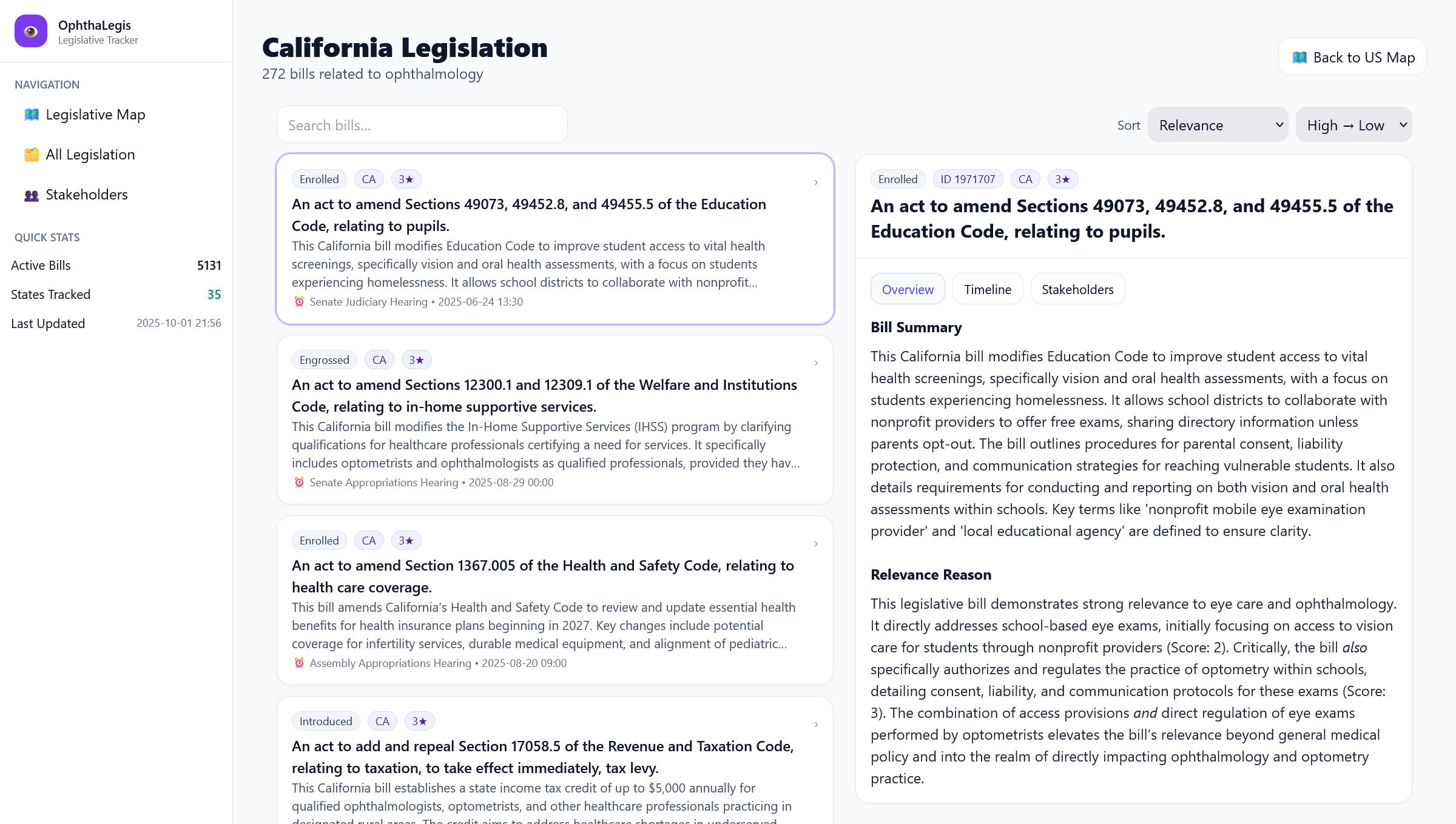
At the state level, the presentation of the bills was refined, making it easier to use and read. Users could quickly identify important bills, sort by relevance, name, or last action date as well as quickly search the database.
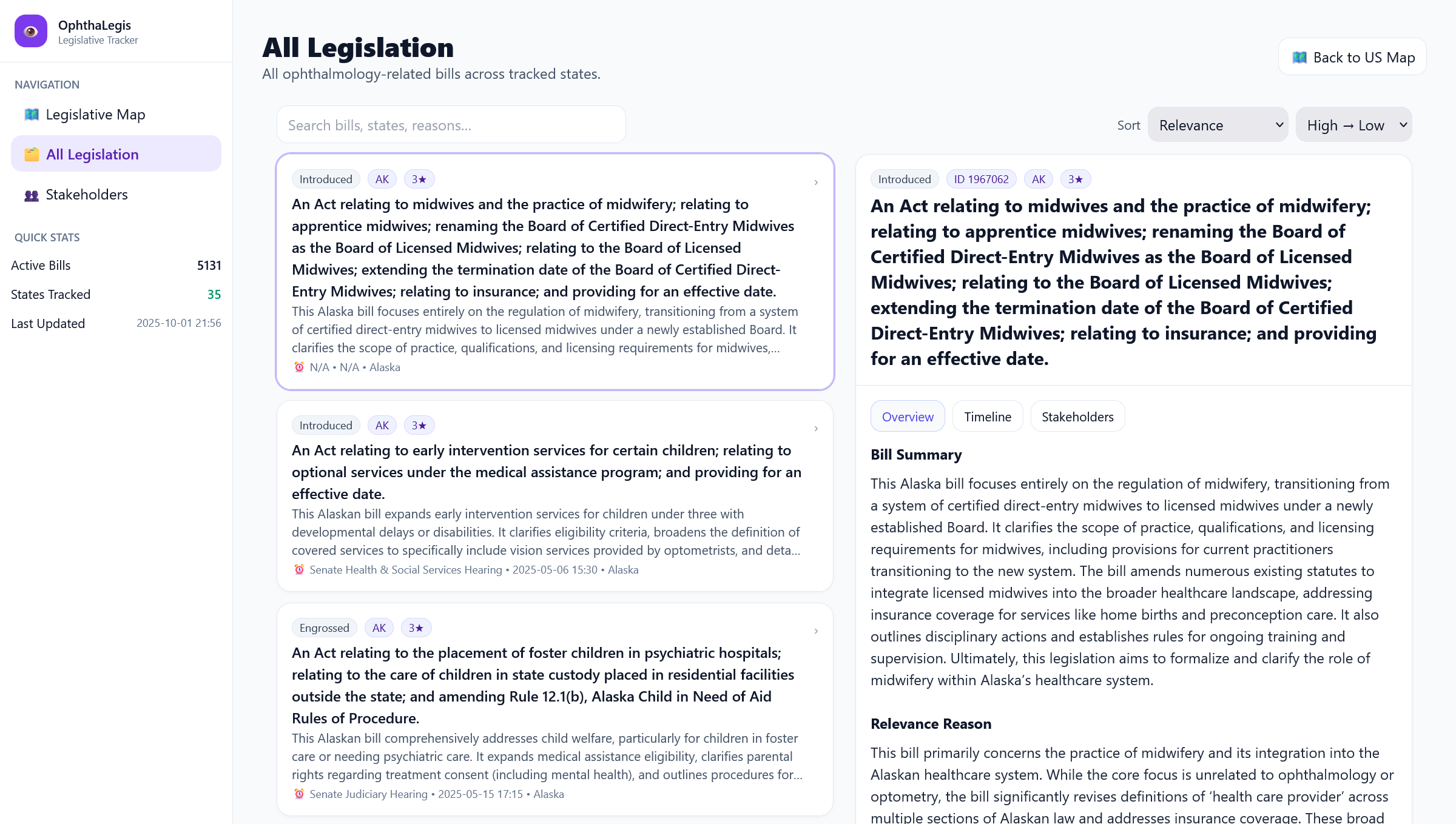
Also, an all legislation page was added so users can view all relevant legislation from all the states on one page.
Version 3
Now, in the latest version (https://ophthalegis.mlpenguin.com), we’ve taken it a step further by adding a heat map that shows which states have the most legislative activity related to ophthalmology and optometry. This makes it easy to spot where the action is happening at a glance, helping users decide which areas might need more attention or advocacy.
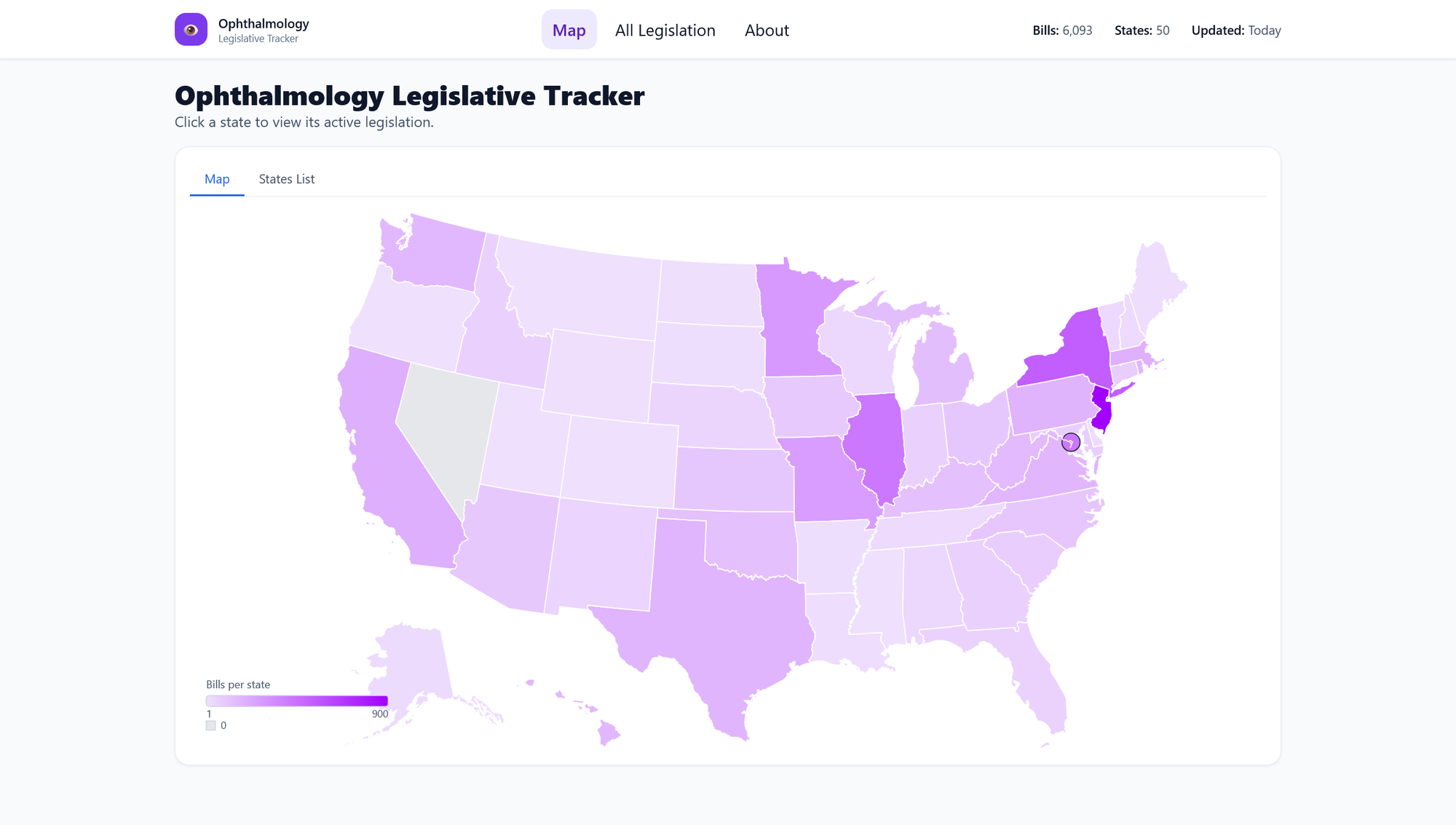
Many refinements were made under the hood to make the website more responsive and easier to use, especially on mobile.
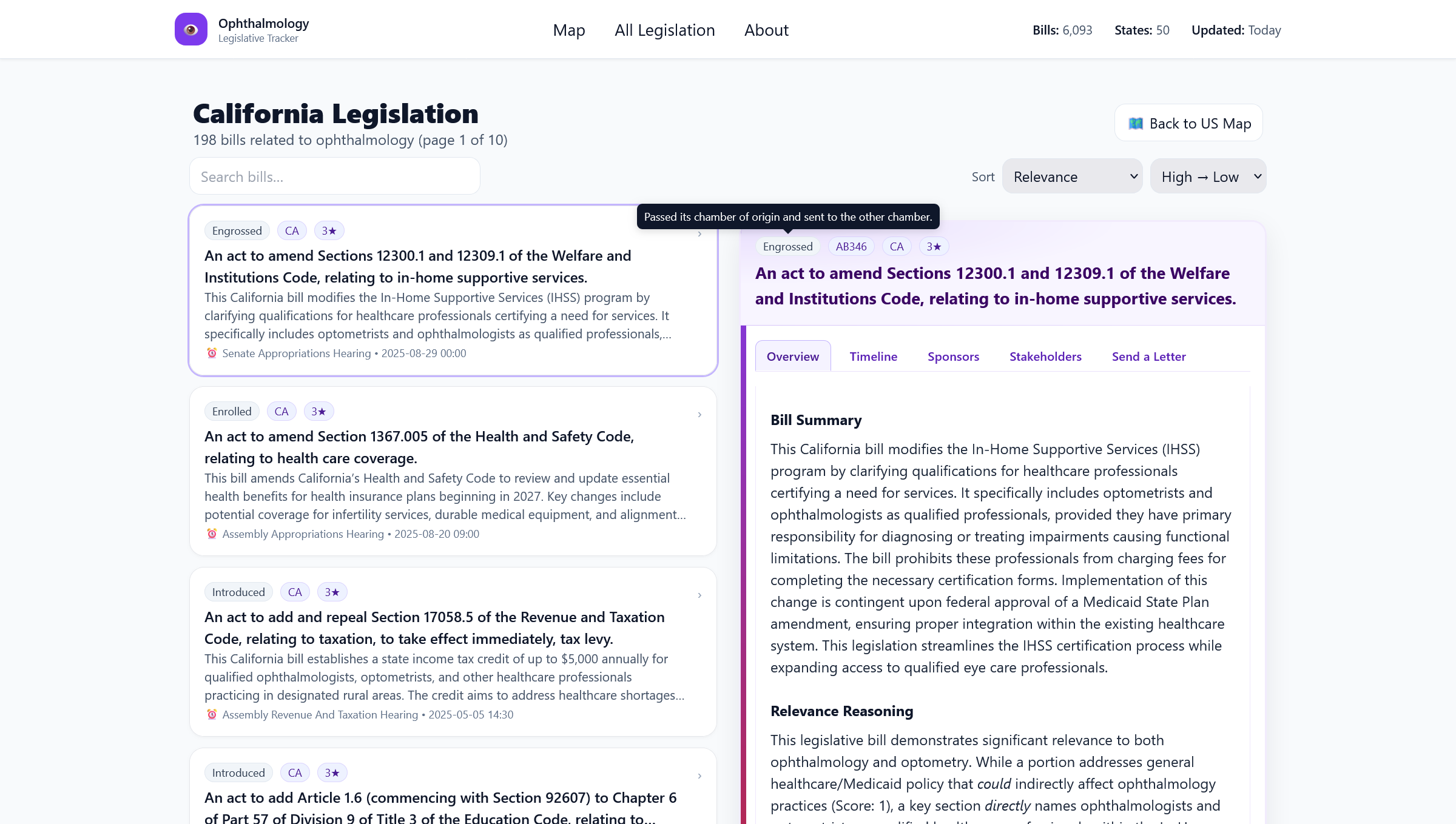
Tooltips were added to add descriptions for what each bill status means, as well as what each relevance grade means.
Looking Ahead
This tool is constantly evolving. We're continuously making improvements to lower the barrier to entry for engaging with legislation.
Our hope is that this tool helps medical students and professionals feel more confident about engaging with legislation. Advocacy shouldn’t feel like something reserved for policy experts; it’s something anyone passionate about their field can take part in.
By making bills easier to understand and more accessible, we want to encourage more people in medicine to get involved, ask questions, and speak up about the issues that matter to them. Because at the end of the day, understanding legislation isn’t just about politics, it’s about shaping the future of healthcare for everyone.