
Sepsis: SOFA, qSOFA, and Surviving Sepsis Campaign

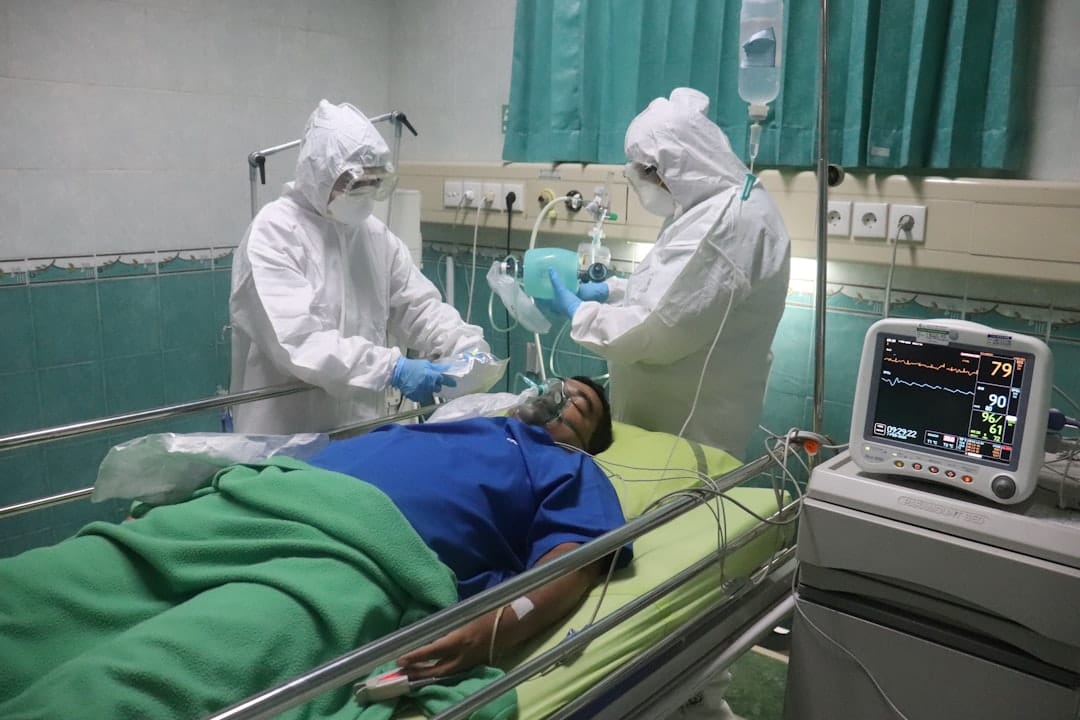
Sepsis Still Kills More Than Cancer. Here's How to Fight Back.
In 2021, sepsis caused roughly 21.4 million deaths worldwide — nearly one in five global deaths. That number includes the COVID-19 surge, but even before the pandemic, sepsis was quietly outkilling most cancers combined. It's the kind of statistic that should make every clinician pause.
If you're a medical student, a resident, or a nurse working long shifts in the ED or ICU, you've already seen sepsis. You just might not have called it by name yet. That patient with the UTI whose blood pressure bottomed out overnight? The post-op elder who became confused and tachypneic? The diabetic with a foot wound who somehow ended up on pressors?
All of that is sepsis. And the good news is: we have tools to catch it early, score its severity, and treat it with a protocol that actually works. Let's walk through them.
What Exactly Is Sepsis? (The Sepsis-3 Answer)
In 2016, the Third International Consensus Definitions — Sepsis-3 — drew a clean line under decades of confusion. The old system relied on SIRS criteria (fever, tachycardia, tachypnea, leukocytosis), which flagged way too many patients who weren't actually sick.
Sepsis-3 redefined the condition as life-threatening organ dysfunction caused by a dysregulated host response to infection. Notice what changed: the focus shifted from inflammatory markers to actual organ failure. The term "severe sepsis" was dropped entirely — if it's sepsis, it's already severe.
The diagnostic threshold is clean: suspected or confirmed infection plus an acute increase of ≥2 points in the SOFA score from baseline. If you don't know the baseline (which is usually the case), assume zero. A SOFA ≥2 already signals a greater than 10% risk of dying in the hospital.
Septic Shock: When It Gets Really Bad
Septic shock adds two more conditions on top of sepsis:
- Persistent hypotension requiring vasopressors to maintain a MAP ≥65 mmHg
- Serum lactate >2 mmol/L (18 mg/dL) despite adequate fluid resuscitation
Hospital mortality for septic shock exceeds 40%. In high-income countries, overall sepsis mortality runs 15–25%, but in low- and middle-income countries it climbs above 40%. Eighty-four percent of sepsis deaths happen in LMICs. That's a massive equity gap.
The SOFA Score: Your Organ Dysfunction Dashboard
The Sequential Organ Failure Assessment has been around since 1996, and for nearly three decades it was the gold standard. It scores six organ systems on a 0–4 scale:
- Respiratory: PaO₂/FiO₂ ratio
- Coagulation: Platelet count
- Liver: Bilirubin
- Cardiovascular: MAP or vasopressor requirement
- CNS: Glasgow Coma Scale
- Renal: Creatinine or urine output
Total score ranges from 0 to 24. Higher numbers mean more organ systems failing, which correlates directly with mortality.
SOFA-2: The 2025 Update
In October 2025, a team of 60 experts published SOFA-2 in JAMA, based on data from over 3.3 million patients across 1,300 ICUs in 9 countries. This was the first major revision in nearly 30 years, and it matters.
Key changes include:
- Respiratory: Now incorporates non-invasive support (HFNC, CPAP, BiPAP) and ECMO. The SpO₂/FiO₂ ratio can be used too, which extends applicability beyond the ICU.
- Renal: Four points for dialysis (including chronic use). Hourly urine output criteria added.
- Cardiovascular: Vasopressors scored only if continuous IV infusion ≥1 hour. Dopamine thresholds clarified.
- CNS: Delirium requiring medication now scores ≥1 point even with a normal GCS. Pre-sedation GCS is used for sedated patients.
The result: AUROC for ICU mortality improved from 0.77 to 0.79. A one-unit increase in SOFA-2 score translates to 38% higher odds of ICU mortality. Not a home run, but meaningful — especially at scale.
qSOFA: The Bedside Screen You Can Actually Use
Here's the thing about the full SOFA score: it requires lab values and sometimes arterial blood gases. In a busy ED or on a ward round, you need something faster. Enter qSOFA.
Three criteria, one point each:
- Altered mentation — GCS < 15
- Tachypnea — respiratory rate ≥ 22 breaths/min
- Hypotension — systolic BP ≤ 100 mmHg
A score of ≥2 means the patient is at higher risk of poor outcomes and deserves a full SOFA calculation. It's designed to be done in under 30 seconds, no labs required.
Will it catch every case? No. Some studies have questioned qSOFA's sensitivity compared to SIRS criteria. But it remains the Sepsis-3 recommended screening tool because it balances speed with reasonable specificity. Think of it as a tripwire — not a diagnosis, but a reason to dig deeper.
The Surviving Sepsis Campaign: Your Hour-by-Hour Playbook
The SSC guidelines are the international standard for sepsis management. The current adult guidelines were published in 2021, and they boil down to something you can actually remember on a 36-hour shift.
The One-Hour Bundle
When you suspect sepsis or septic shock, four things need to happen within the first hour:
- Measure serum lactate. If it's above 2 mmol/L, recheck after resuscitation. Rising lactate tells you perfusion is still inadequate.
- Obtain blood cultures. At least two sets, including one drawn from outside any existing IV catheter. Do this before antibiotics if you can without delaying them by more than 45 minutes.
- Give broad-spectrum IV antibiotics. Within 1 hour for septic shock. Within 3 hours for sepsis without shock. This is the single most time-sensitive intervention — every hour of delay bumps mortality by roughly 7%.
- Start fluid resuscitation. 30 mL/kg of crystalloid for hypotension (MAP <65 mmHg) or lactate ≥4 mmol/L.
Treatment Details That Matter
Fluids: Balanced crystalloids like Lactated Ringer's are preferred over normal saline. The evidence is modest but consistent — balanced solutions avoid hyperchloremic acidosis and may reduce AKI risk. After the initial bolus, switch to a fluid-restrictive approach guided by dynamic measures like capillary refill time or fluid responsiveness, not static numbers.
Vasopressors: Norepinephrine is first-line. Target MAP ≥65 mmHg. If you need more, add vasopressin at a fixed dose of 0.03 units/min — don't just keep cranking up the norepinephrine. Epinephrine is third-line. Dopamine is generally not recommended unless the patient has bradycardia with low arrhythmia risk.
Here's a pearl that saves time: peripheral vasopressor administration is acceptable while you wait for central line placement. Don't delay pressors because the vascular access team is running late.
Antibiotics: Start broad, then narrow. Review daily. De-escalate as culture results come back. Typical duration is 7–10 days for most serious infections, and procalcitonin can help you shorten that window safely.
Corticosteroids: If the patient has septic shock requiring ongoing vasopressors despite adequate fluids, give IV hydrocortisone at 200 mg/day. The evidence supports this — it helps reduce vasopressor requirements and may shorten delirium duration.
What's New: AI, Biomarkers, and Precision Immunotherapy
The field is moving fast. A few developments worth knowing about:
AI detection systems are no longer just academic exercises. The COMPOSER deep learning algorithm monitors 150+ patient variables and was associated with a 17% relative decrease in sepsis mortality in a 2024 study. Johns Hopkins' TREWS system cut median time to first antibiotic by nearly two hours. And the Sepsis Immunoscore — the first FDA-cleared AI algorithm for sepsis prediction — uses 22 clinical parameters to flag patients within 24 hours of admission.
New biomarkers are expanding our diagnostic toolkit beyond lactate and procalcitonin. Interleukin-6 rises within 1–2 hours of an infectious insult. Presepsin offers rapid test results. The ELL2 gene product (B cell-derived) was identified in 2025 as a novel marker that can distinguish new patient subtypes.
Precision immunotherapy showed promise in the ImmunoSep trial (2021–2024). By matching immune-modulating drugs to patients' specific immune phenotypes — macrophage activation syndrome versus sepsis-induced immunoparalysis — researchers significantly improved organ dysfunction scores. Twenty-eight-day mortality didn't budge, but the concept is sound and the next iteration will likely be better targeted.
The Bottom Line
Sepsis is everywhere, it kills silently, and it rewards early action with dramatically better outcomes. Your job as a clinician is simple in theory and hard in practice: suspect it, score it, treat it, and don't wait.
Keep these numbers in your head:
- qSOFA ≥2 → calculate full SOFA
- SOFA increase ≥2 from baseline → sepsis
- Antibiotics within 1 hour for shock, 3 hours without
- 30 mL/kg crystalloid for hypotension or lactate ≥4
- Norepinephrine first, vasopressin second, MAP target of 65
- Hydrocortisone 200 mg/day for refractory shock
The Global Sepsis Alliance has set a 2030 target of reducing sepsis incidence by at least 25% and improving survival by over 20%. Those goals won't be met by guidelines alone. They'll be met by clinicians who recognize the pattern, act on it, and don't let a tired shift or institutional inertia slow them down.
That patient with the UTI whose BP is dropping? Calculate their qSOFA. Now.